Poetry Insights
Who Owns Your Poetry When You Publish It Online? Copyright and Publication Rights
Do you still own a poem after posting it online? Understand copyright, Poetry Now’s publishing license, magazine rules, competition eligibility, and how to protect your work.
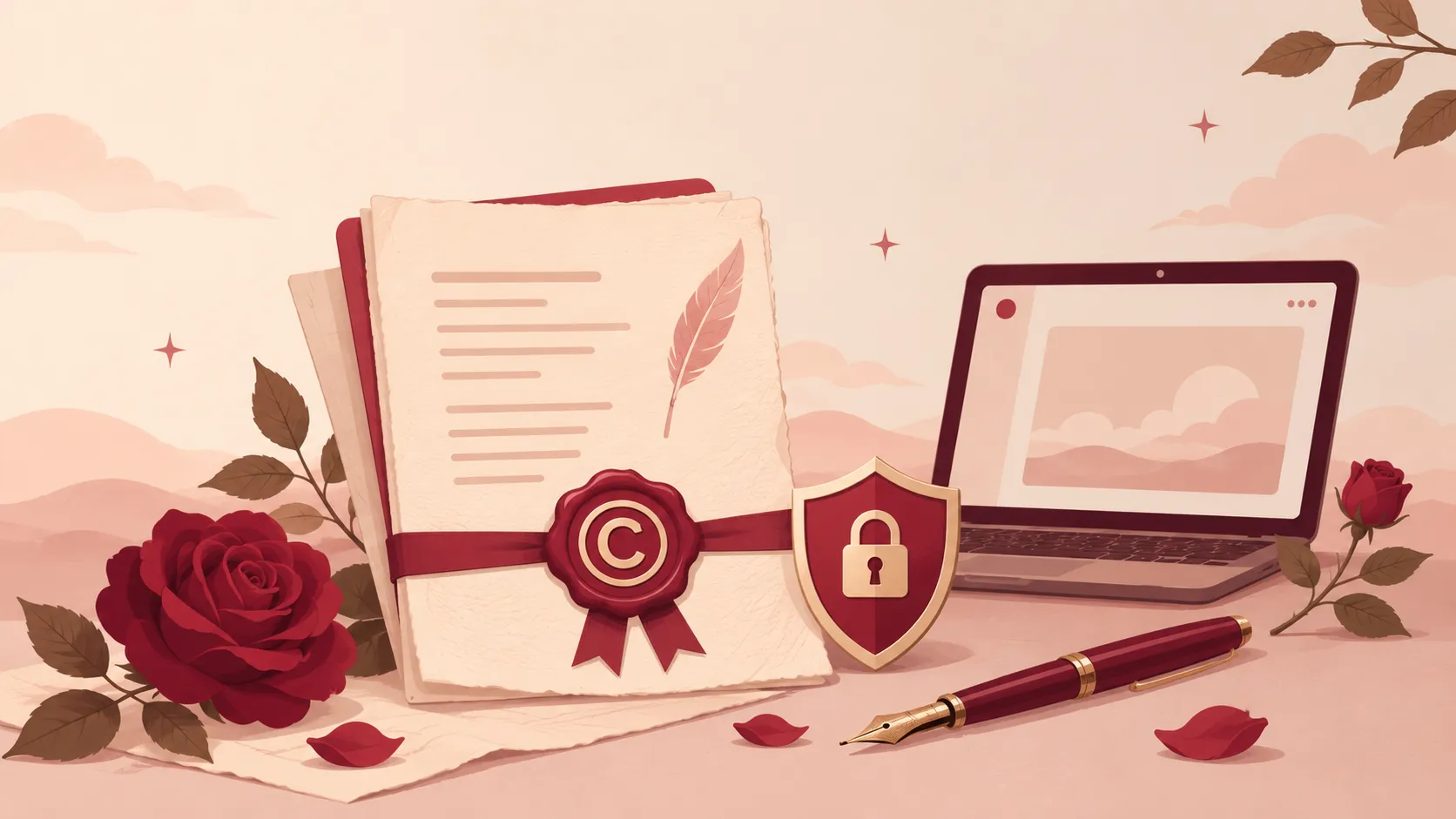
You have written a poem, chosen a title, and finally decided to share it online. Then a question appears: if you post it on a website, does it still belong to you?
In most cases, yes. Publishing a poem online does not, by itself, transfer its copyright to the website. But there is an important difference between owning a poem and giving someone permission to use it. Understanding that difference can save you trouble later, especially if you want to enter competitions or submit to literary magazines.
Your poem is usually protected before you publish it
You do not have to win a competition, print a book, or register a website account to become the copyright owner of an original poem. In many countries, copyright protection begins automatically when you create the work. Writing it in a notebook or saving it as a document can be enough.
The World Intellectual Property Organization (WIPO) explains that copyright normally does not require registration and that poems are among the literary works it can protect. Rules vary between countries, and some legal systems have extra requirements for particular claims or disputes.
Copyright protects your particular words and creative choices, not every idea behind them. You cannot own the general idea of a poem about missing home. Another poet can explore that same feeling, but copying your original lines may be a different matter. The U.S. Copyright Office makes the same distinction between an idea and the way an author expresses it.
Publishing a poem does not automatically give away ownership
Imagine you write a poem called The Window Across the Street and upload it to a poetry website. Readers can now discover it, but that does not mean the website has become its author. Nor does it mean every visitor has permission to copy it into a book, turn it into song lyrics, or sell prints of it.
Websites need some permission to show the writing people submit. That permission is usually explained in their terms of service as a license. A license can allow certain uses of your poem while you remain its copyright owner.
The details matter. One site might request permission only to display your work. Another might also ask to reproduce it in newsletters, adapt it for promotional material, or keep using it after you close your account. Reading the license is more useful than looking only for a sentence that says you retain ownership.
What happens when you publish on Poetry Now?
We created Poetry Now to give poets a place to share their writing and find readers. We also think it is important that writers can see what they agree to when they publish with us.
Our Terms of Service say that you retain ownership of the poems and other content you submit. They also say that, by submitting content, you give Poetry Now a perpetual, royalty-free, non-exclusive, worldwide license to use it in connection with operating, marketing, promoting, and improving the platform.
That language covers more than simply displaying your poem on its own page. The terms allow us to reproduce, modify, adapt, publish, translate, distribute, perform, and display submitted content for those platform-related purposes, including elsewhere on the site or in public communications about Poetry Now.
Here is what those words mean in everyday language:
- Non-exclusive means you have not promised that Poetry Now will be the only place allowed to use the poem. Subject to any separate agreements you have made, you can still share or license your work elsewhere.
- Royalty-free means the license does not require Poetry Now to pay you each time it uses the poem under that permission.
- Worldwide means the permission is not limited to one country.
- Perpetual means the permission is not set to expire after a certain number of months or years.
Our terms also state that the license may continue to apply after an account is terminated. So it would be misleading to suggest that deleting an account automatically withdraws every permission already granted. If the extent of a license matters to your plans, read the full terms before posting and contact us with questions.
Can another person copy your poem because it is public?
Being able to read a poem is not the same as having permission to republish it. Someone may enjoy your work, send a link to a friend, or discuss it. That does not automatically give them the right to reproduce the whole poem on their own website or claim it as theirs.
There are exceptions to copyright, such as limited quotation for certain purposes, but these differ by country and situation. Giving a poet credit is respectful, yet credit alone is not a substitute for permission when permission is required.
You might also see poems offered under a Creative Commons license. These are optional permissions that authors choose to give the public. For example, some licenses allow reuse with attribution, while others restrict commercial use or adaptations. Creative Commons warns that its licenses generally cannot be revoked once granted. Do not apply one unless you understand what other people will be allowed to do.
Will posting online affect poetry competition entries?
This is one of the biggest practical questions for poets. You may still own the copyright to a poem and no longer be eligible to submit it somewhere that requires unpublished work.
For example, The Poetry Society's National Poetry Competition requires eligible entries to be previously unpublished. Its competition FAQ explicitly treats a poem on a personal blog or social media page as website publication. Meanwhile, the Society of Classical Poets permits previously published poems in its 2026 competition.
Neither approach is a universal rule. Each organizer decides its own entry conditions. A contest may also have rules about simultaneous submissions, anonymity, poem length, age, or the rights granted to winners.
Before making a poem public, ask yourself whether you want to enter it in a competition that requires unpublished work. If the answer is yes, keeping that particular poem private until you have checked the rules may be the safer choice. You can publish other poems in the meantime.
What do literary magazines mean by first publication rights?
Many literary magazines want to be the first publication to share a poem with their readers. That is why submitting a poem after posting it online can sometimes close a door, even though you still own the poem.
Poetry magazine's submission guidelines, for instance, say it considers only previously unpublished work and counts online appearances, including social media posts, as prior publication. Other journals accept reprints or previously published poems, sometimes asking you to name the original publication.
You may also see phrases such as first publication rights, exclusive rights, and reprint rights in an acceptance agreement. These describe what the publisher is asking to do with the poem and whether anyone else can use it during a particular period. They do not all mean that the publisher is buying your copyright. Read the actual agreement to see which rights are granted, for how long, and whether you may republish the poem later.
There is also a difference between a magazine's submission policy and the legal meaning of publication. Copyright law can define publication differently from an editor's eligibility rules. For submissions, follow the editor's written guidelines rather than assuming a legal definition settles the question.
What if you delete a poem later?
Removing a poem from a public page does not erase the fact that it appeared there. A competition or magazine may still consider it previously published. Screenshots, shared copies, and cached pages may also remain outside your control.
Deletion is separate from licensing, too. As explained above, Poetry Now's current terms grant a perpetual license and say content may still be used under that license after an account is terminated. That is a real consideration for anyone deciding where to publish.
If you are uncertain about a particular poem, it is worth asking the website or prospective publisher before uploading it rather than hoping a later deletion will undo the decision.
What can you do if someone uses your poem without permission?
Start by saving evidence. Keep your original draft, the date you shared it, and a link or screenshot showing the other person's use. Check whether you previously granted permission or whether a legal exception could apply.
You can then contact the person or website hosting the copy, explain that you wrote the poem, and ask for the unauthorized use to stop. Many platforms have copyright-reporting processes. In the United States, formal notice-and-takedown procedures may apply to some online services; the right approach depends on the platform and the law involved.
For a serious dispute, especially one involving money or repeated copying, advice from a qualified copyright professional may be more useful than an argument in a comment section.
A short checklist before you press publish
- Keep an original copy. Save your drafts and the final version somewhere you control.
- Check your next goal. If you want to enter a contest or submit to a magazine, read its previous-publication rules first.
- Read the platform's terms. Look for the rights you are licensing, whether they are exclusive, and whether the permission can continue after deletion.
- Check borrowed material. A line from another poem or someone else's photograph may come with its own copyright restrictions.
- Choose what stays private. You do not have to publish every poem you finish. Keep some unpublished if you are saving them for a particular opportunity.
Share your work with a clearer understanding
We want Poetry Now to be a place where people feel comfortable discovering poems and sharing their own. That starts with being clear about the choices writers make, not treating copyright as fine print that nobody needs to read.
If you want to explore other writers' work, visit our poetry collections. When you have a poem you are happy to share publicly, our Write Poem page gives you a place to publish it. You can also read our first-poem publishing guide if you are new to the platform.
You can be generous with your poetry and careful with your rights at the same time. The important part is knowing what sharing means before you do it.
This article offers general information, not legal advice. Copyright rules and publishing agreements differ by country, platform, and publisher.